

BN Report
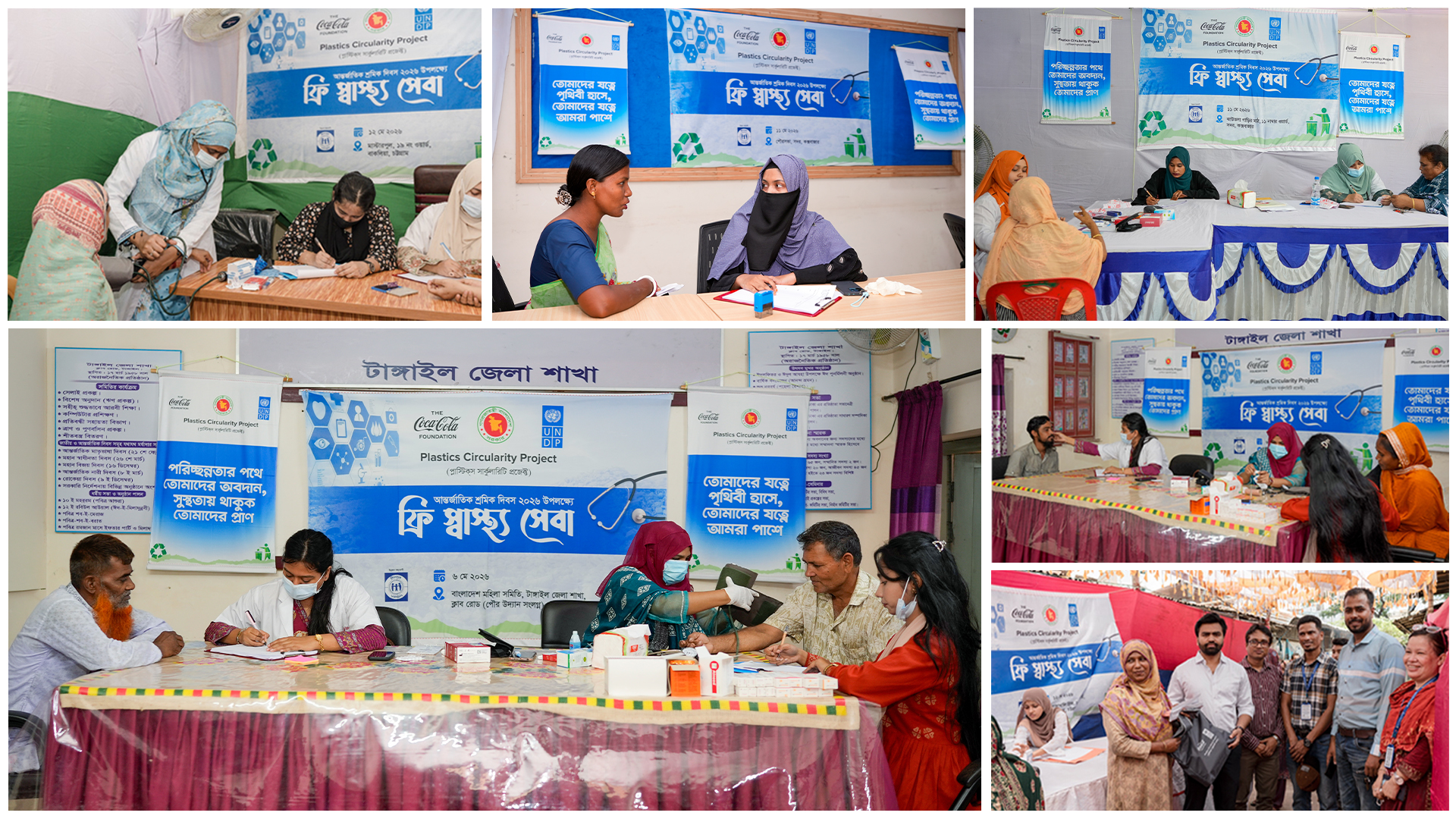
The United Nations Development Programme (UNDP) Bangladesh, in partnership with The Coca-Cola Foundation and Young Power in Social Action (YPSA), has concluded a series of six gender-sensitized health camps for informal waste workers in Chattogram, Cox’s Bazar and Tangail, reaching more than 300 men and women whose daily labour keeps the country’s cities clean and prevents plastic from leaking into the landfills, rivers, drains, canals and the Bay of Bengal.
Held on 6 May in Tangail, 11 May in Cox’s Bazar and concluding on 12 May in Chattogram, the camps were organised under UNDP’s Plastics Circularity Project (PCP), a three-year initiative supported by The Coca-Cola Foundation. Two camps were held in each district.
Each camp offered a full cycle of free care: blood pressure screening, blood sugar testing, weight and temperature checks, and a one-on-one consultation with a female doctor covering chronic back and joint pain, skin and respiratory conditions, occupational stress, and reproductive health for women. Beneficiaries left with prescribed medicines including pain relievers, ORS, iron & calcium supplements and antifungal cream.
Recognizing the specific needs of women in the sector, the camps also provided private consultations on reproductive and menstrual health. Additionally, respective women attendees received “dignity kits” containing women’s personal hygiene and safety supplies.
Bangladesh’s informal waste sector employs a significant number of women, who often face overlapping health risks but rarely access services tailored to their needs.
“Waste workers are the foundation of any functioning circular economy, yet they remain among the most underserved in our health system,” said Samiul Ahsan, Project Expert of the Plastics Circularity Project at UNDP Bangladesh. “These camps are part of a sustained commitment to ensure that the people building a cleaner Bangladesh are seen, supported and protected.”
Local government representatives across all three districts welcomed the initiative. In Tangail, Elenga Municipality Executive Officer Chandana Rani Sarkar thanked UNDP and the Coca-Cola Foundation “for providing health services and addressing the basic needs of plastic waste collection workers.” The Administrator of Cox’s Bazar Municipality, Md. Shamim Al Imran announced plans to “build a health database and issue personal health insurance to registered plastic waste workers so they can remain under continuous medical care.” In Chattogram City Corporation, the Malaria & Mosquito Control Officer, Md. Sarful Islam Mahi called for broader action: “Addressing the global plastic crisis requires collaboration across government, the private sector, and civil society. Chattogram City Corporation stands firmly behind this initiative.”
Bangladesh generates over 800,000 tonnes of plastic waste each year, much of which is recovered and channelled back into the economy by an informal workforce of pickers, sorters and collectors. Despite this contribution, these workers are routinely exposed to hazardous and unhygienic waste with little protection or recognition.
Plastics Circularity Project aims to recycle 15,000 metric tonnes of plastic waste and directly support 2,000 plastic waste workers, including 600 women, across Chattogram, Cox’s Bazar and Tangail by October 2027.